
Trenchless Pipe Lining for South Florida Sewer Lines
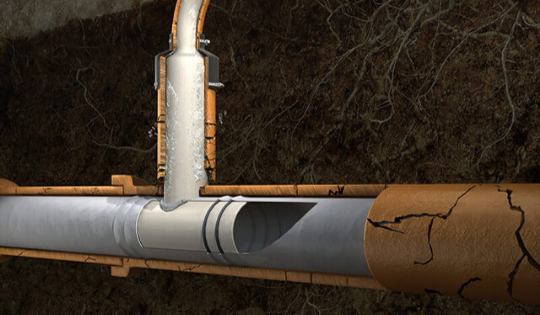
All Counties Plumbing, Inc. installs cured-in-place pipe (CIPP) trenchless lining to restore deteriorated or damaged underground sewer lines without excavating your driveway, landscaping, or finished floors. For South Florida homes and businesses across Miami-Dade and Broward Counties, trenchless lining is often the most efficient way to repair a cracked, root-invaded, or corroded cast iron or clay lateral without the disruption and cost of a full excavation. We insert an epoxy-saturated felt liner through an existing cleanout, inflate it against the interior walls of the old pipe, and cure it into a seamless, joint-free structural pipe that resists root intrusion and restores full flow capacity.
Trenchless lining solves the core problem with older sewer laterals: the pipe is still structurally a pipe, but its interior has degraded. Cast iron common in pre-1980s South Florida homes channel and scale from decades of use, narrowing the flow and creating the rough surfaces that catch roots and debris. Clay laterals develop cracks and joint separations that invite root intrusion. Rather than digging up the entire line, lining creates a new pipe inside the old one, eliminating the joints and cracks that cause recurring problems while preserving the surfaces above.
We serve homeowners and commercial property owners whose sewer camera inspection has revealed a lining-eligible lateral, and we recommend lining only when the pipe's condition actually supports it. Call (305) 303-0920 to schedule a camera inspection and a lining assessment.
What Trenchless Pipe Lining Includes
Our trenchless lining service covers the full process of rehabilitating a sewer lateral from within, without excavation. The scope below reflects the work we perform regularly for South Florida properties.
- High-definition camera inspection to confirm the lateral is structurally sound enough to accept a liner
- Interior cleaning and descaling to remove scale, root masses, and debris before lining
- Epoxy-saturated felt liner insertion through an existing cleanout, eliminating the need for excavation
- Liner inflation and curing to create a seamless, joint-free structural pipe inside the old one
- Post-lining camera verification to confirm full flow restoration and liner integrity
- Reconnection of branch lines and service restoration, typically within a single day
- Coordination of any required municipal permits and inspections for the rehabilitated line
Who Trenchless Pipe Lining Is Suitable For
Trenchless lining is suitable for properties whose sewer camera inspection shows a lateral that is structurally sound enough to accept an epoxy liner but has interior defects such as cracks, pinhole leaks, missing bottom sections, moderate root intrusion, or joint separations. That includes many older South Florida homes with cast iron or clay laterals that have not yet collapsed but are causing recurring clogs, slow drainage, or root intrusion. It is also an option for commercial properties with accessible lines that meet the structural criteria.
Lining is not suitable for every lateral. A completely collapsed pipe, a line with a severe belly holding water, or a pipe that has lost structural integrity cannot be lined and requires excavation and replacement. We confirm eligibility with a camera inspection before recommending lining, so you do not invest in a liner that will not perform. We are honest about when lining is the right answer and when it is not.
Available Options, Materials, and Methods
The trenchless method we use is cured-in-place pipe (CIPP) lining. After thoroughly cleaning and descaling the old pipe with hydro jetting and mechanical cutting, we pull or invert an epoxy-saturated felt liner through the existing cleanout. The liner is inflated against the interior walls of the old pipe and cured in place, hardening into a continuous, seamless structural pipe with no joints for roots to penetrate. The result is a smooth-bore interior that restores full hydraulic capacity and resists the corrosion and root intrusion that caused the original problem.
The liner is sized to the existing pipe's diameter and length, and the epoxy is engineered for the wastewater environment. Where a lateral has a severe belly or a collapsed section, a spot excavation may be required to address that section before lining the remainder, or a full replacement may be the only durable option. We explain the trade-offs of lining versus replacement based on what the camera shows, including the expected lifespan and the cost difference, so you can decide with full information.
Benefits, Limitations, and Considerations
The primary benefit of trenchless lining is avoiding the destruction that comes with excavation. Traditional sewer replacement can require jackhammering tile floors, tearing up driveways and walkways, and removing landscaping, all of which add cost and disruption. Lining accesses the pipe through an existing cleanout, preserving the surfaces above and completing the work in a fraction of the time. The seamless interior also eliminates the joints and cracks that invite root intrusion, which is the most common cause of recurring lateral problems in older South Florida homes.
The limitation is that lining depends on the pipe being structurally sound enough to accept the liner. A collapsed pipe, a severely bellied line, or a pipe that has lost its round shape cannot be lined and must be excavated. Lining also slightly reduces the interior diameter of the pipe, though modern thin-wall liners minimize this reduction. We confirm eligibility with a camera inspection before recommending lining and tell you honestly when excavation is the better answer.
How the Trenchless Lining Process Works
Trenchless lining follows a structured sequence so the finished liner performs as intended.
- 1We camera-inspect the lateral to confirm it is structurally sound enough to accept a liner and measure the length and diameter
- 2We clean and descale the interior with hydro jetting and mechanical cutting so the liner bonds to a sound surface
- 3We insert the epoxy-saturated felt liner through an existing cleanout and inflate it against the pipe walls
- 4The liner cures in place, hardening into a seamless, joint-free structural pipe
- 5We camera-inspect the finished liner to confirm full flow restoration and provide documentation for your records
Preparation and What to Expect
Before we arrive, ensure the cleanout we will use for access is reachable and that the household can limit water use during the lining process. Most residential lining projects are completed in a single day, which minimizes the water shutoff time compared to a multi-day excavation. If the liner runs under a driveway, patio, or finished floor, no excavation is required, which is the main advantage of the method.
During the visit, expect the sound of the jetting and curing equipment and a brief period when the affected fixtures cannot be used while the liner cures. Once cured, we restore service and camera-verify the result. We walk you through what was done and what to watch for in the days after the installation.
Maintenance and Aftercare
After a lining installation, the new epoxy interior resists the root intrusion and corrosion that caused the original problem, so the maintenance burden drops significantly compared to an aging cast iron or clay line. The seamless interior also improves flow, which reduces the clogs and slow drainage that often prompted the lining in the first place. We recommend a follow-up camera inspection only if symptoms recur, which is uncommon with a properly installed liner.
To protect the rehabilitated line, avoid flushing flushable wipes, grease, and other debris that can build up in any drain line, and be mindful of tree planting near the lateral path even though the liner resists root intrusion better than jointed pipe. The liner is engineered for a long service life, and we are happy to advise on what to watch for over time.
Relevant Local Considerations and Confirmed Coverage
Our confirmed trenchless lining territory is Miami-Dade and Broward Counties, dispatched from Opa-locka. South Florida's older housing stock includes many cast iron and clay laterals installed decades ago that are now reaching the end of their service life, which makes trenchless lining a frequent and appropriate solution for properties where excavation would be especially disruptive. The region's mature tree canopy also contributes to the root intrusion that lining is designed to resist.
Trenchless lining projects may require municipal permits and inspections depending on the scope and local jurisdiction. We confirm the specific requirements for your address before starting regulated work and coordinate inspections where required.
Verified Reasons to Choose All Counties Plumbing
Property owners across South Florida call us for trenchless lining because we confirm eligibility with a camera inspection before recommending the method, so you do not invest in a liner your lateral cannot support. We use high-quality epoxy liners installed through existing cleanouts to preserve driveways, landscaping, and finished floors, and we complete most residential projects in a single day. Our verified customer reviews include sewer and trenchless work completed across South Florida.
Frequently Asked Questions
The questions below come up most often when property owners consider trenchless pipe lining. Each answer gives the direct response first, then the detail that helps you decide whether lining is right for your lateral.
Frequently Asked Questions
How does trenchless pipe lining work?
After thoroughly cleaning and descaling the old pipe, we insert an epoxy-saturated felt liner through an existing cleanout. The liner is inflated against the interior walls and cures into a continuous, seamless structural pipe.
What are the advantages of trenchless lining over traditional excavation?
Trenchless lining avoids destroying expensive tile floors, asphalt driveways, decorative pavers, and landscaping. It is completed much faster, creates zero joint vulnerabilities for root entry, and carries a decades-long lifespan.
Can all damaged sewer pipes be lined using trenchless methods?
Pipes with cracks, pinhole leaks, missing bottoms, and moderate root intrusion can be lined. Completely collapsed pipes or pipes with severe grade depressions ('bellies') may require spot excavation.
How long does the trenchless lining process take?
Most residential trenchless pipe lining projects are completed in a single day, minimizing water shutoff time for your household.
What is the expected lifespan of an epoxy cured-in-place pipe?
CIPP pipe liners are engineered to last 50 years or more, resisting chemical corrosion, rust degradation, and root penetration.
Request This Service
Talk to our dispatch team about trenchless pipe lining for your Miami-Dade or Broward property.
allcountiesplumbinginc@gmail.com