
Grease Trap Services for South Florida Commercial Kitchens
All Counties Plumbing, Inc. provides grease trap pumping, cleaning, repair, and installation for restaurants, food trucks, cafeterias, and food service facilities across Miami-Dade and Broward Counties. Commercial kitchens must keep fats, oils, and grease, known as FOG, out of the municipal sewer system, and a functioning grease interceptor is the device that does that work. We pump the accumulated grease, scrape the interior baffle walls, and provide the compliance records your health inspector and environmental regulator expect to see.
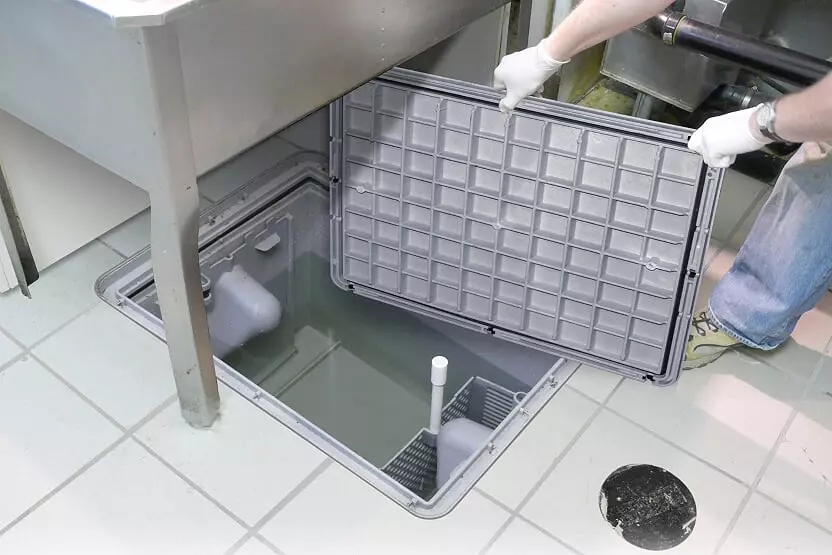
A grease trap works by slowing the flow of kitchen wastewater enough that lighter grease floats to the top and heavier solids settle to the bottom, allowing only the clarified water between to pass onward to the sewer. When the grease and solids layer exceeds roughly a quarter of the trap's liquid capacity, the trap stops functioning and grease carries into the outgoing line, where it hardens and causes the kitchen backups and code violations that no restaurant wants. Regular pumping prevents that failure.
What Grease Trap Service Includes
Our grease trap service covers the maintenance, repair, and installation work that keeps a commercial kitchen compliant and flowing. The scope below reflects the work we perform regularly for South Florida food service facilities.
- Under-sink indoor grease trap cleanouts for smaller flow rates in compact kitchens
- Large in-ground commercial grease interceptor pumping for high-volume restaurants and food production facilities
- Baffle inspection and gasket replacement to keep the interceptor separating grease effectively
- Grease trap repair for cracked tanks, failed lids, and blocked outlet lines
- New grease trap and interceptor installation sized to the kitchen's flow and waste load
- Disposal manifests and municipal compliance documentation for your health inspector and environmental logbook
Who Grease Trap Service Is Suitable For
Grease trap service is for any commercial kitchen or food service facility in our confirmed territory that produces FOG waste. That includes restaurants, cafes, food trucks with fixed plumbing, cafeterias in offices and schools, ghost kitchens, catering facilities, and grocery store food preparation areas. If your operation cooks, fries, or processes food and connects to a sewer or septic system, you need a functioning grease interceptor and regular service to keep it working.
We work with owners, kitchen managers, and property managers coordinating service across multiple locations. A single restaurant with a full in-ground interceptor, a small cafe with an under-sink trap, and a multi-unit food hall with shared drainage all fall under this service, each with its own pumping interval based on the kitchen's actual volume.
Available Options, Materials, and Methods
Grease interceptors come in two main types. Indoor under-sink traps sit directly beneath prep sinks and handle smaller flow rates, typically in compact kitchens. Exterior in-ground interceptors are large concrete or fiberglass vaults, often 750 to 2,000 gallons or more, that handle the facility's total culinary waste. We service both, and we install new units sized to the kitchen's flow and waste load when a replacement is needed.
Pumping is performed with vacuum trucks that extract the accumulated grease and solids, followed by scraping of the interior baffle walls to remove hardened residue. For recurring heavy grease, we can schedule hydro jetting of the outgoing lines to clear the buildup that pumping alone does not reach. We do not recommend enzyme or bacterial additives as a substitute for pumping; while some can help with odor, none remove accumulated solids, and over-reliance on them leads to the line clogs that pumping prevents.
Benefits, Limitations, and Considerations
The benefit of regular grease trap service is compliance and uptime. A pumped interceptor keeps grease out of the municipal sewer, prevents the kitchen backups that close a line during service, and produces the manifest records your inspector expects. Scheduled pumping also avoids the emergency shutdowns and code enforcement citations that follow when a neglected trap finally fails.
The limitation is that pumping addresses the trap, not the downstream lines. If grease has already hardened in the outgoing pipe, pumping alone will not clear it, and hydro jetting may be required. We also cannot promise a fixed pumping interval for every kitchen because volume varies; a high-volume fry kitchen may need monthly service while a low-volume cafe may need it far less often. We help you find the right interval based on what we observe during service.
How the Grease Trap Process Works
Every grease trap service visit follows a sequence designed around keeping your kitchen operating.
- 1Call or request service and tell us your trap type, kitchen volume, and when the last pumping was performed
- 2We dispatch a vacuum truck and, where possible, schedule service before opening or after close so staff and guests are not exposed to odors
- 3We pump the accumulated grease and solids, scrape the interior baffles, and inspect the trap's structure and outlet line
- 4We provide a service manifest documenting gallons pumped, date, time, and certified disposal facility records for your compliance file
- 5We recommend a pumping interval based on the grease load we observed and flag any repair needs such as a cracked lid or failing gasket
Preparation and What to Expect
Before we arrive, let your kitchen team know we are coming and clear the area around the trap access. For in-ground interceptors, ensure the outdoor access lid is reachable by our truck, which may mean moving dumpsters or stored items. For under-sink traps, clear the cabinet beneath the sink so the technician can reach the unit.
During the visit, expect the sound of the vacuum truck and a brief period of odor as the trap is opened, which is why we recommend scheduling around your operating hours. Most pumpouts are completed within an hour or two. We provide the manifest before we leave so your compliance file stays current.
Maintenance and Aftercare
After a pumping, the most useful aftercare is keeping a log of service dates and the grease levels observed, so you and we can track the right pumping interval for your kitchen's actual volume. For high-volume kitchens, quarterly or semi-annual pumping is common, but the right schedule depends on what we see during service. We can set up a recurring schedule that fits your operation without locking you into service you do not need.
To reduce the grease load between pumpings, scrape plates before washing, avoid pouring fryer oil down the drain, and train staff on what can and cannot go through the three-compartment sink. These habits extend the time between pumpings and reduce the risk of a mid-shift backup. If a drain slows between scheduled services, call us rather than waiting, since a slow line often signals grease buildup that jetting can clear before it becomes a full blockage.
Relevant Local Considerations and Confirmed Coverage
Our confirmed grease trap territory is Miami-Dade and Broward Counties, dispatched from Opa-locka. South Florida's dense restaurant market produces heavy FOG loading on municipal sewers, which is why local water authorities enforce grease management requirements and require disposal manifests showing certified disposal. We provide those records with every pumping so your compliance file stays audit-ready.
Municipal FOG rules vary by city and county, including required pumping thresholds and manifest formats. We confirm the specific requirements for your address before performing regulated work and submit the documentation your local authority expects.
Verified Reasons to Choose All Counties Plumbing
Commercial kitchens across South Florida call us because our vacuum truck fleet handles grease interceptor pumping and cleaning in a single visit, we schedule service around your operating hours to keep staff and guests away from odors, and we provide the disposal manifests your health inspector expects. Our verified customer reviews include commercial plumbing and grease trap work completed across South Florida.
Frequently Asked Questions
These are the questions kitchen managers and owners ask us most often about grease trap service. Each answer leads with the direct response, then adds the detail that helps you plan the visit.
Frequently Asked Questions
How often must restaurants have grease traps pumped?
Under municipal FOG regulations, grease traps typically must be pumped when the combined layer of grease and solids exceeds 25% of the liquid volume—often every 1 to 3 months depending on kitchen volume.
What happens if a grease trap is neglected?
Fats harden in outgoing pipes, causing severe kitchen sink overflows, foul kitchen odors, costly emergency shutdowns, and significant municipal code enforcement citations.
What is the difference between an indoor grease trap and an exterior grease interceptor?
Indoor grease traps sit directly under prep sinks and handle smaller flow rates. In-ground grease interceptors are large concrete or fiberglass outdoor vaults (750 to 2,000+ gallons) handling the facility's total culinary waste.
What documentation does All Counties Plumbing provide following service?
We provide complete service manifests detailing gallons pumped, date, time, and certified disposal facility records for your health inspector and environmental regulatory logbooks.
Can grease trap servicing be performed before kitchen opening hours?
Yes, our technicians schedule early morning or late night service appointments so your culinary staff and dining guests are never exposed to odors during service.
Request This Service
Talk to our dispatch team about grease trap services for your Miami-Dade or Broward property.
allcountiesplumbinginc@gmail.com