
Drain Field Services for South Florida Septic Systems
All Counties Plumbing, Inc. diagnoses, repairs, and replaces drain fields for residential and commercial septic systems across Miami-Dade and Broward Counties. The drain field is the underground absorption system that receives clarified effluent from the septic tank and filters it back into the soil. When the soil becomes compacted, the distribution pipes clog, or roots invade the trenches, wastewater pools on the lawn, odors appear, and backups reach the house. We identify the cause of the failure and perform the repair or permitted replacement that restores absorption.
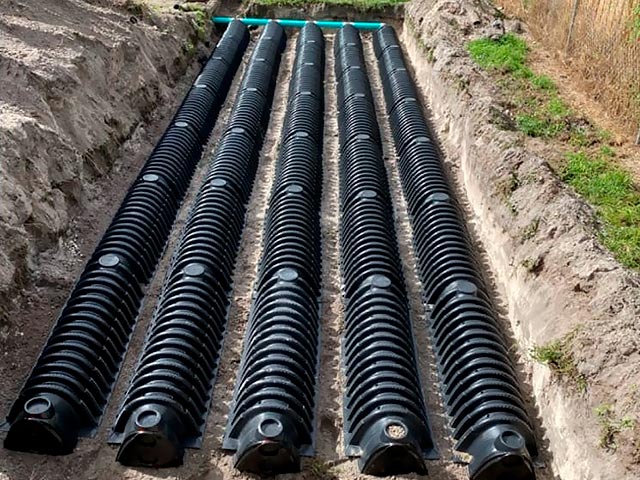
A drain field works through a combination of soil percolation and microbial action. Effluent leaves the tank, flows through a distribution box, and enters perforated pipes laid over an absorption bed of gravel and native soil. The soil filters the liquid as it percolates downward. When that soil becomes saturated with a biomat, a slimy layer of organic material, or when the pipes fill with roots or solids, the effluent has nowhere to go and surfaces in the yard. Restoring the field means addressing the specific cause of that failure.
What Drain Field Service Includes
Our drain field service covers the inspection, maintenance, repair, and replacement work that keeps an absorption system functioning. The scope below reflects the work we perform regularly for South Florida properties.
- Drain field percolation and flow testing to assess absorption capacity and locate failure zones
- Perforated distribution pipe flushing and clearing to remove root intrusion and solids buildup
- Drain field rejuvenation and absorption bed restoration where the soil can be recovered without full replacement
- Distribution box inspection and repair to ensure even flow across all trenches
- Permitted drain field engineering and full replacements when the soil is saturated or the system has failed
- Coordination of soil percolation testing required by the county health department for new or replacement fields
Who Drain Field Service Is Suitable For
Drain field service is for any property in our confirmed territory that operates on a septic system rather than a municipal sewer connection. That includes single-family homes in unincorporated Miami-Dade and Broward, rural properties near Homestead and the Redland, and small commercial buildings outside the sewer grid. If your waste flows to a tank and drain field, this is the service that keeps the absorption side working.
We also serve property owners noticing the warning signs of field failure, such as soggy ground, lush green stripes over the trenches, or slow household drains combined with an outdoor odor. Catching failure early can sometimes allow rejuvenation rather than full replacement, which is why we encourage a call at the first sign rather than waiting for a backup.
Available Options, Materials, and Methods
The options depend on what is causing the failure. Where root intrusion or a distribution issue is the cause, targeted repairs or line flushing can sometimes restore percolation without excavation. Where the soil is biomat-saturated but the trenches are structurally sound, rejuvenation techniques that rest the field or introduce new absorption media may help. Where the soil is fully saturated or the trenches have collapsed, a permitted replacement is required.
For replacements, we coordinate the soil percolation testing the county health department requires, size the new field to the property's usage and site conditions, and install perforated pipe over a properly graded absorption bed. The materials, layout, and setback distances follow Florida Department of Health and local county standards. We do not promise a specific field lifespan because soil conditions and usage vary, but a correctly installed and maintained field provides many years of service.
Benefits, Limitations, and Considerations
The benefit of professional drain field service is that it addresses the actual cause of failure rather than the symptom. A rejuvenated field restores absorption and prevents surfacing effluent; a replaced field restores full system function and protects the surrounding property and groundwater. The benefit of a correct diagnosis is that you do not pay for a replacement when a repair would have worked, and you do not pay for a repair when only a replacement will solve the problem.
The limitation is that drain field work depends on soil conditions, which we cannot change. If the native soil has lost percolation capacity, no amount of clearing will restore it, and a replacement is the only durable fix. We also cannot guarantee a specific lifespan because usage, groundwater, and root pressure vary. What we can do is tell you honestly what we find, what the options are, and what each option will and will not accomplish.
How the Drain Field Process Works
Drain field service follows a diagnostic sequence so the recommendation matches the actual cause of the problem.
- 1Call or request service and describe the symptoms, such as surfacing effluent, soggy ground, odors, or slow household drains
- 2We inspect the field, test percolation, and check the distribution box and lateral lines to locate the failure zone
- 3We explain what we found and recommend the appropriate response, whether rejuvenation, targeted repair, or full replacement
- 4For repairs, we flush or clear the affected lines and restore flow; for replacements, we coordinate the percolation test, permitting, and installation
- 5We test the restored system under normal household usage and explain what to watch for and how to protect the field going forward
Preparation and What to Expect
Before we arrive, locate your tank and field markers or site plans if you have them, and clear any obstacles from the yard over the field. For a replacement, expect excavation equipment and a multi-day timeline, with the household on limited water use during the work. For a rejuvenation or repair, the visit is typically shorter and less disruptive, though some digging may be required to reach the distribution box or lateral lines.
During the visit, we will explain what we are doing at each step. Replacements require a permit and a county health department inspection, which we coordinate on your behalf. We restore the soil and grade over the work area when the installation is complete, and we walk you through how to protect the new field from compaction and root intrusion.
Maintenance and Aftercare
After a repair or replacement, protecting the field is the most important aftercare. Never park vehicles or build structures over the absorption area, since compaction destroys percolation. Divert roof downspouts and surface drainage away from the field so heavy rain does not saturate the soil. Maintain regular septic tank pumping so solids do not carry over and clog the field, and avoid planting water-loving trees near the trenches where roots will seek the moisture.
Watch for the warning signs of recurrence, including soggy ground, unusually lush grass over the trenches, or slow household drains. A new field should absorb normally for many years when protected and pumped on schedule, but soil conditions and usage vary, so we help you track the right maintenance rhythm for your specific system rather than giving a one-size answer.
Relevant Local Considerations and Confirmed Coverage
Our confirmed drain field territory is Miami-Dade and Broward Counties, dispatched from Opa-locka. South Florida's high water table reduces the vertical percolation distance available for absorption, which makes field design and maintenance more sensitive here than in drier regions. Heavy rainy-season loading, mature tree root systems, and the prevalence of older septic systems in unincorporated areas all influence how a field performs.
Drain field replacements in Florida require permits and soil percolation evaluations overseen by the county health department to protect groundwater. We coordinate that process for replacements and new installations so the system meets environmental standards. We confirm the specific requirements for your address before starting regulated work.
Verified Reasons to Choose All Counties Plumbing
Property owners across South Florida call us because we diagnose the actual cause of drain field failure rather than defaulting to the most expensive option, and we coordinate the permitting and percolation testing required for replacements. Our verified customer reviews include a drain field replacement in Miami-Dade County where the customer noted the professionalism and the quality of the completed system.
Frequently Asked Questions
The questions below come up most often when property owners call about drain field issues. Each answer gives the direct response first, then the detail that helps you plan the work.
Frequently Asked Questions
What causes a drain field to fail in South Florida?
High groundwater tables, soil saturation after heavy rains, solid waste carryover from un-pumped septic tanks, driving heavy vehicles over the absorption field, or invasive tree roots commonly cause drain field failure.
What are the common symptoms of drain field failure?
Spongy, waterlogged ground or standing dark water over the drain field, unusually lush green grass above trenches, foul sewage odors outside, and sewage backing up into lowest household drains.
Can a damaged drain field be repaired without full replacement?
If failure is caught early and caused by root intrusion or distribution box issues, targeted repairs or line flushing can sometimes restore percolation. If soil is biomat-saturated, replacement may be necessary.
What permits are required for drain field replacement?
In Florida, drain field replacements require permits and soil percolation evaluations overseen by county health departments to ensure environmental groundwater safety.
How should I protect my drain field after repair or installation?
Never park vehicles or build structures over the field, divert roof downspouts away from the absorption area, and maintain regular septic tank pumping schedules.
Request This Service
Talk to our dispatch team about drain field services for your Miami-Dade or Broward property.
allcountiesplumbinginc@gmail.com